
Struggling with heavy gear that ruins your trip? You need a reliable, lightweight pot1 that lasts. A pot that is light but tough enough for years of adventure.
The best titanium pot balances weight, volume, and durability. For solo hikers, a 750ml pot is ideal. For groups, choose 1.3L or larger. Always check for features like graduated markings and a secure lid2 to ensure it meets your specific outdoor needs.
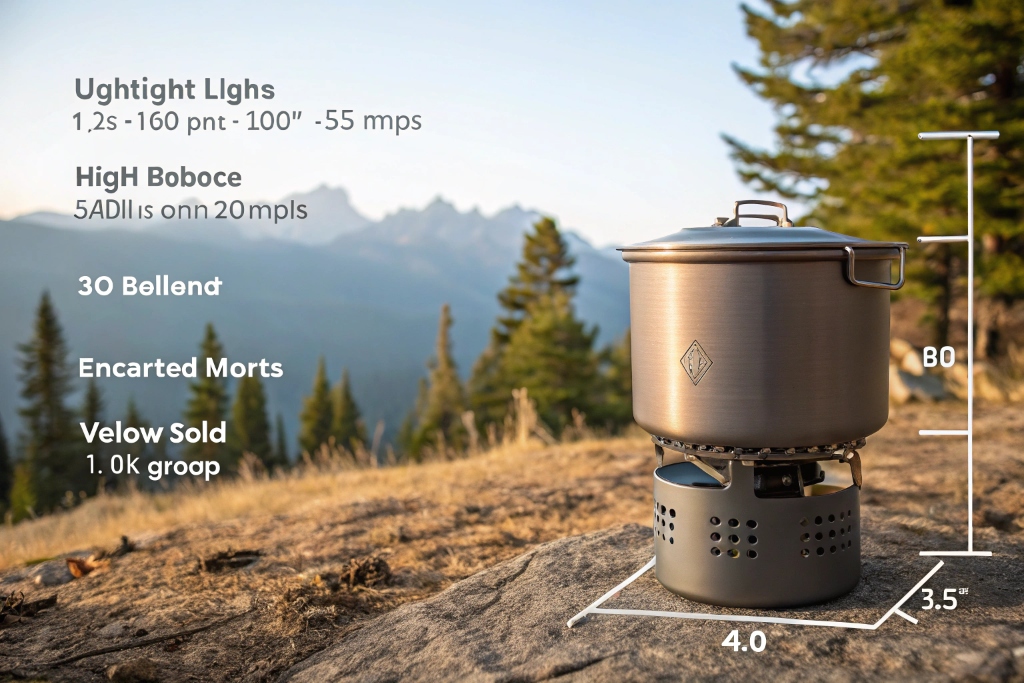
Choosing the right pot seems simple, but small details make a huge difference in the field. I've spent years testing gear, and I want to share what I've learned from my time both in the backcountry and on the factory floor. This isn't just about picking a product off a shelf; it's about understanding what makes a piece of gear truly reliable. Let's break down exactly what you need to look for so you can make the best choice for your customers and your brand.
What Makes Titanium the Ultimate Material for Outdoor Cookware?
Worried about your cookware rusting or adding too much weight? Steel is heavy, and aluminum can be fragile. You need a material that is both ultralight and incredibly strong3.
Titanium is the ultimate material because it's nearly as strong as steel but 45% lighter. It's also completely rust-proof4 and doesn't leave a metallic taste in your food. This unique combination makes it perfect for demanding outdoor use.
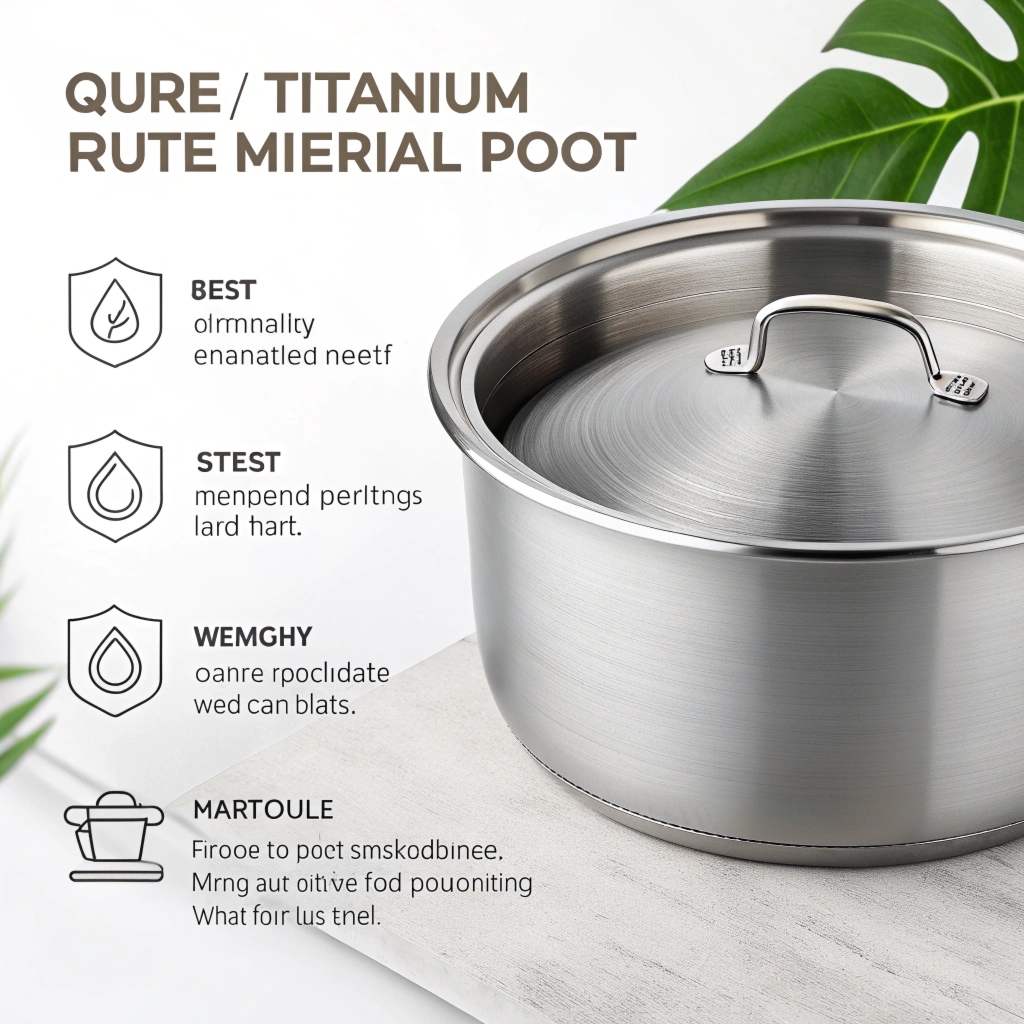
When we talk about outdoor gear, every gram matters. But weight savings can't come at the cost of durability. This is where titanium really shines. I've worked with many materials over the years, and none offer the same balance as titanium. It has an incredible strength-to-weight ratio. This means you get a pot that can handle being knocked around in a pack without adding unnecessary bulk. It's also biocompatible5, which is a technical way of saying it won't leach chemicals or a weird metallic taste into your water or food. Your morning coffee should taste like coffee, not metal. As a manufacturer, we choose pure Grade 1 titanium6. This ensures our clients receive products that deliver on the promise of being ultralight, ultra-strong, and completely safe for food use. For brands, this translates directly to higher customer satisfaction and fewer product returns.
| Feature | Titanium | Stainless Steel | Anodized Aluminum |
|---|---|---|---|
| Weight | Ultralight | Heavy | Lightweight |
| Strength | Very High | Very High | Moderate |
| Corrosion Resistance | Excellent | Good | Fair |
| Heat Transfer | Moderate | Poor | Excellent |
| Price | High | Low | Moderate |
How Do You Match Pot Size and Volume to Your Adventure?
Not sure what size pot to pack? A pot that's too big is wasted weight and space. A pot that's too small leaves you hungry and frustrated. Getting the size right is key.
Match pot size to your group and meal type. For a solo hiker mainly boiling water, a 550ml to 750ml pot is perfect. For two people or more complex meals, consider a 1.1L to 1.6L pot. Always think about what can nest inside.
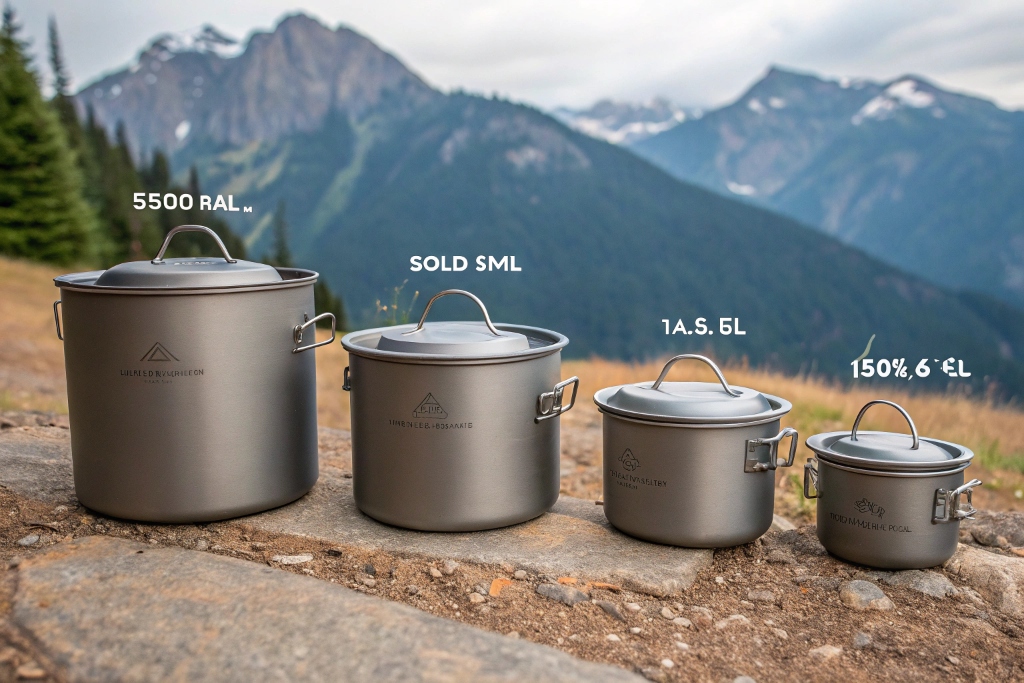
Choosing the right pot volume is a practical decision that directly impacts your experience. It's not just about how many people you're feeding; it's about what you're cooking and what else you need to carry. Let's look at this more closely.
Solo Adventurer's Choice
For solo trips, efficiency is everything. A 550ml to 750ml pot is usually the sweet spot. A 750ml pot is perfect for boiling enough water for a dehydrated meal and a hot drink. One of the best parts is that you can often nest a 110g fuel canister7 and a small stove inside it. I remember a solo trip where this setup saved me a surprising amount of space in my pack. It kept my entire cook system compact and protected. A 900ml pot gives you a little more room for cooking simple noodles or melting snow without it boiling over.
Partner and Small Group Cooking
When you're with one or two other people, you need more capacity. A 1.1L to 1.3L pot is a great all-rounder for two people. It gives you enough volume to cook a shared meal like pasta or rice. For groups of three or for winter camping where you need to melt a lot of snow for drinking water, stepping up to a 1.6L or even a 1.9L pot makes sense. A larger pot becomes the core of your camp kitchen.
Here is a simple guide:
| Pot Volume | Ideal For | Typical Use |
|---|---|---|
| 550ml - 750ml | 1 Person | Boiling water, rehydrating meals |
| 900ml - 1.3L | 1-2 People | Simple cooking, melting snow |
| 1.6L+ | 2-3 People | More complex meals, group cooking |
What Design Features Should You Look for in a Titanium Pot?
Are you frustrated by clumsy pot designs? Spills, burnt fingers, and lids that don't fit are common issues. You need smart features that make cooking outdoors easy and safe.
Look for essential design features. A well-fitting lid with a vent hole, foldable handles with silicone grips8, and internal volume markings are non-negotiable. A bail handle9 is also great for hanging the pot over a fire in bushcraft scenarios.
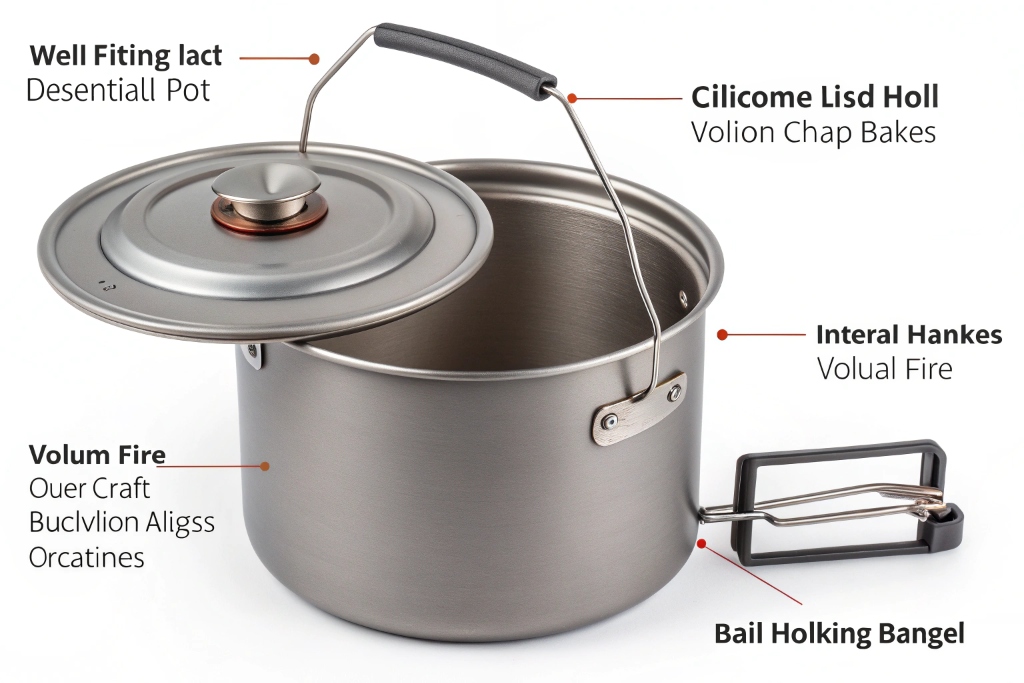
The devil is in the details. A pot is more than just a metal container; its design features determine how user-friendly it is. After years of producing cookware, I’ve learned which features are essential and which are just gimmicks.
Lids, Handles, and Spouts
A snug-fitting lid is crucial. It traps heat, which means your water boils faster and you use less fuel. The lid should also have a small vent hole to let steam escape and prevent it from rattling or boiling over. Foldable handles are a must for packability. Look for handles that are long enough to keep your fingers away from the flame and have silicone tubing to prevent burns. I learned this the hard way on an early trip with a pot that had bare metal handles. A small pour spout is another great feature that prevents spilling hot water when you're making coffee. For bushcraft enthusiasts, a bail handle9 allows you to hang the pot over a campfire, offering more cooking versatility.
Graduations and Shape
Internal graduation marks are a simple but vital feature. They allow you to measure water precisely for freeze-dried meals, taking the guesswork out of cooking. The pot's shape also matters. A tall, narrow pot10 is generally more fuel-efficient on a canister stove because it directs more heat up the sides. A wider, shorter pot is more stable on uneven ground and provides a larger surface area for sautéing or simmering food. We manufacture both styles because we know different activities demand different designs.
Why is Manufacturing Quality So Important for Titanium Pots?
Worried about getting poor-quality products from a supplier? Inconsistent welds and thin materials can lead to failures at the worst possible time. You need a partner who guarantees quality.
Manufacturing quality ensures durability and safety. Look for a supplier with strict quality control, like dedicated QC staff11 on each production line. Consistent wall thickness, smooth welds, and proper material sourcing prevent leaks and breakage, protecting your brand's reputation.
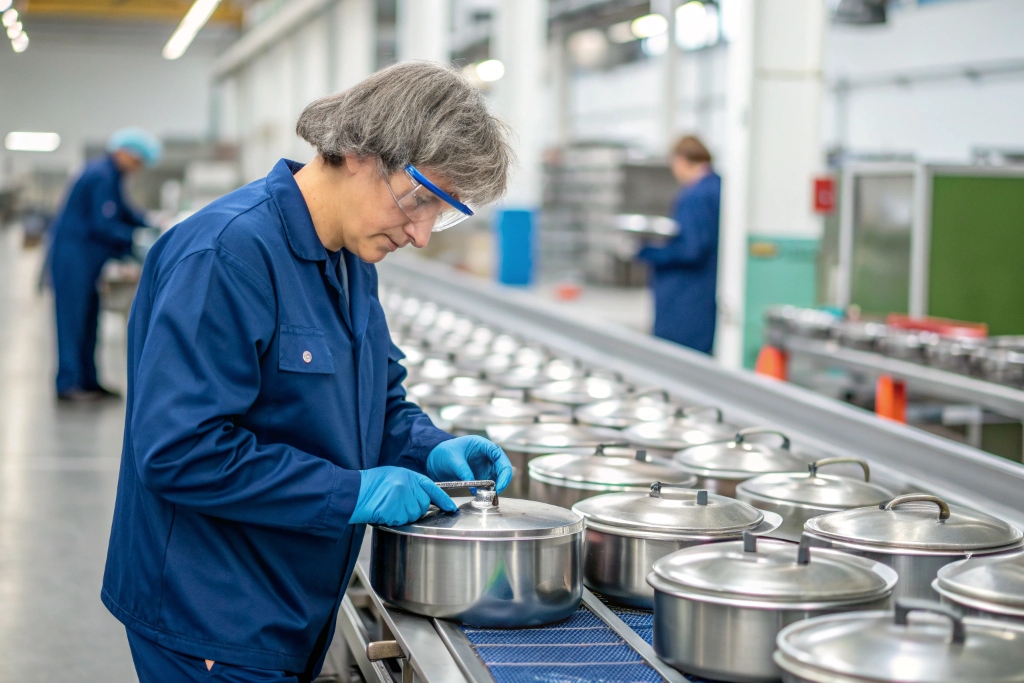
As a purchasing manager, your biggest risk is a product that fails. A faulty pot in the backcountry is more than an inconvenience; it can be a safety issue. This is why manufacturing quality is paramount. It's the foundation of a product your customers can trust.
The Role of Quality Control
Excellent manufacturing is a process. It begins with sourcing the right material—pure Grade 1 titanium6, not cheaper alloys that can compromise strength and safety. Then, the titanium sheets are stamped and drawn into shape. This must be done precisely to ensure a uniform wall thickness. If the walls are uneven, you get hot spots that burn food and weak points that can fail. The welding of handles and spouts is another critical step. A poor weld can break under the weight of a full pot of boiling water. At our facility, we understand these risks deeply.
Our Commitment at Wanderware
I've been in this industry for over ten years, and I've seen what separates good products from bad ones. At Wanderware, we run eight dedicated production lines for titanium cookware. More importantly, each line is supervised by a quality control specialist with over five years of experience. They don't just check a few pots from each batch; they inspect every single item. This rigorous process is how we support our clients—major brands in Europe and the US—by minimizing procurement risks and reducing warranty costs12. They trust us because we deliver products that build their customers' trust.
Conclusion
Choosing the best titanium pot comes down to four things: the material, size, design, and manufacturing quality. Get these right, and you’ll have a reliable product your customers will love.
Discover why a lightweight pot is essential for reducing the burden of your hiking gear and enhancing your outdoor experience. ↩
Explore how a secure lid can prevent spills and improve cooking efficiency, ensuring a hassle-free outdoor cooking experience. ↩
Understand the unique properties of titanium that make it the perfect choice for durable and lightweight outdoor cookware. ↩
Find out why rust-proof titanium cookware is ideal for outdoor adventures, offering longevity and safety in various weather conditions. ↩
Discover how biocompatibility ensures that titanium cookware won't leach harmful chemicals into your food, keeping meals safe and tasty. ↩
Learn why Grade 1 titanium is preferred for cookware, offering superior strength and safety for outdoor cooking. ↩
Explore the benefits of nesting a fuel canister in your pot to save space and protect your cooking gear during outdoor adventures. ↩
Find out how foldable handles with silicone grips enhance safety and convenience when handling hot pots during camping. ↩
Learn how a bail handle adds versatility to your camping pot, allowing it to be hung over a fire for various cooking methods. ↩
Understand why a tall, narrow pot is more fuel-efficient and ideal for certain cooking methods during camping trips. ↩
Find out how dedicated quality control staff ensure the highest standards in manufacturing, leading to reliable and safe cookware. ↩
Learn how rigorous quality control can reduce warranty costs by preventing defects and ensuring long-lasting cookware. ↩