
Choosing outdoor gear can be tough. The wrong mug might seem small, but it can make your trip less enjoyable. Let’s find the perfect one for you.
For serious backpacking, a titanium mug1 is better because it is incredibly lightweight. For general camping and everyday use, a stainless steel mug offers fantastic durability and value for a much lower price. Your choice depends on your activity and budget.
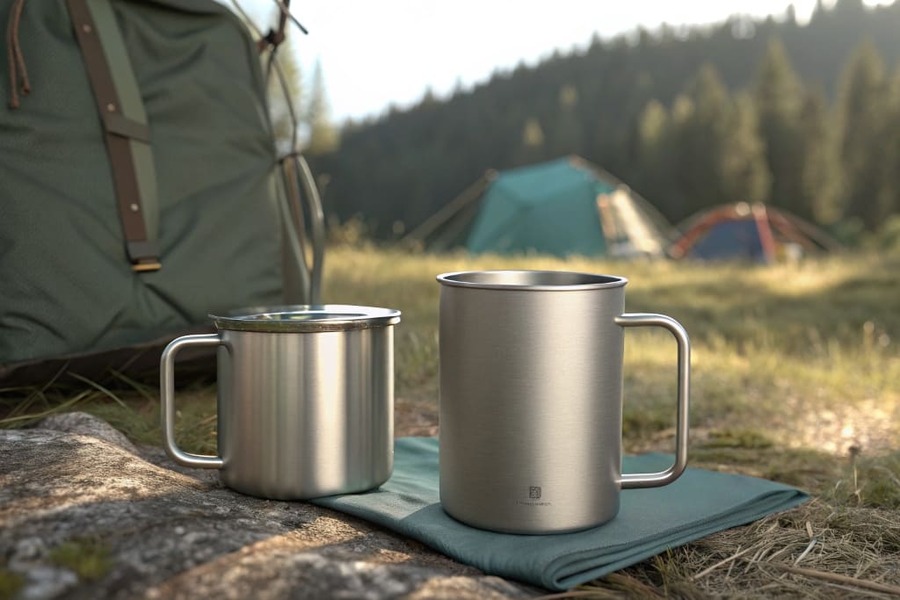
Deciding between titanium and steel isn't just about the material. It's about how you camp, how far you travel, and what you value most in your gear. I've used both for years on different trips, from car camping weekends to long-distance treks. The right mug really does make a difference. Let's break down the details so you can feel confident in your choice and focus on enjoying your time outside.
Is Weight the Most Important Factor for Your Gear?
Carrying a heavy pack all day is exhausting. It can turn a beautiful hike into a painful chore. Let's see how much your mug's weight really matters.
Titanium mugs are almost half the weight of steel mugs, making them the clear winner for backpacking. For car camping or short trips where weight isn't a concern, the heavier steel mug is perfectly fine and saves you money.
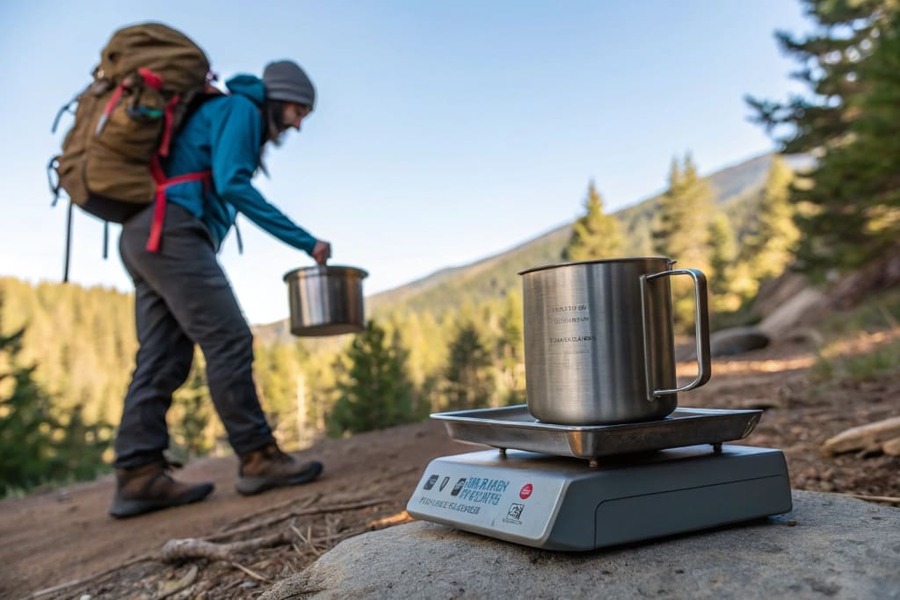
When I started backpacking, I didn't think a few ounces mattered. I took a sturdy steel mug on my first multi-day hike. By the end of day two, I was looking for anything to leave behind. My shoulders ached, and that heavy mug felt like a brick. The next trip, I switched to titanium. The difference was noticeable. While one item won't make or break your trip, the weight savings2 add up across all your gear. This is the core of the ultralight backpacking3 philosophy. A lighter pack means more energy, less strain on your body, and a more enjoyable experience on the trail.
Why Ounces Matter on the Trail
For a car camper, the weight difference is irrelevant. But for someone hiking 15 miles a day, it's everything. Let's look at the numbers.
| Feature | Titanium Mug (12 oz / 350ml) | Stainless Steel Mug (12 oz / 350ml) |
|---|---|---|
| Average Weight | 2-4 oz (55-115g) | 5-8 oz (140-225g) |
| Best Use Case | Backpacking, Thru-hiking | Car Camping, Day Hikes, General Use |
| Impact on Pack | Minimal; contributes to an ultralight setup | Noticeable; adds to base weight |
The choice here is simple. If you carry your home on your back, every ounce counts, and titanium is the way to go. If your car does the heavy lifting, save your money and stick with steel.
Which Mug Can Truly Withstand the Rigors of the Outdoors?
Outdoor gear takes a beating. A broken or rusted mug is useless when you're miles from civilization. You need something that lasts.
Both materials are very strong. Stainless steel is harder and resists dents better, making it a rugged workhorse. Titanium is also strong but can dent more easily, though it's completely rustproof4 and resists corrosion far better than steel.
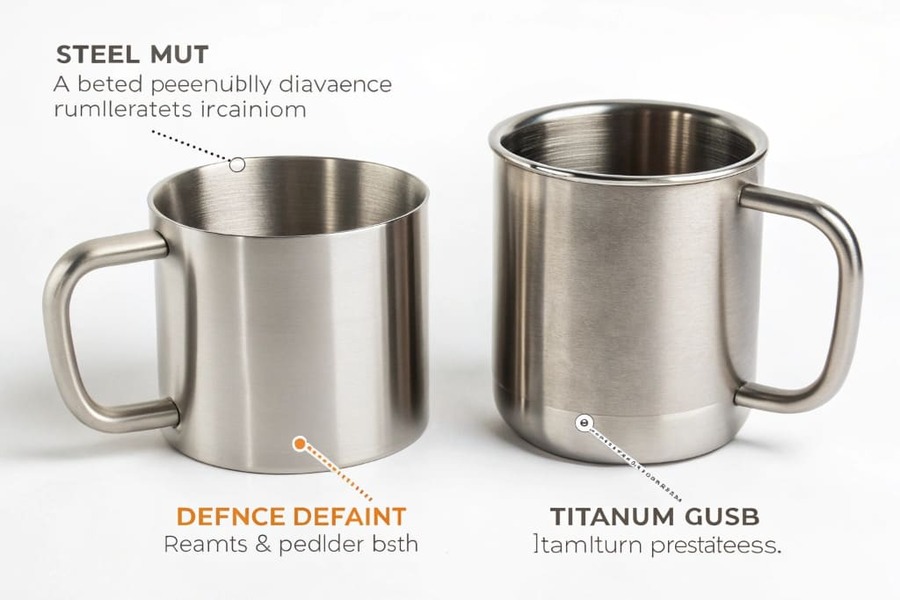
I’ve dropped my mugs more times than I can count. My old steel mug has a few dents, but it's as solid as the day I bought it. It feels indestructible. On the other hand, I once saw a friend's titanium pot get a significant dent after a hard fall onto a rock. It was still usable, but it showed the impact. However, the real long-term killer for metal is corrosion. Titanium is king here. It will never rust or corrode, no matter what you put in it or where you take it. Steel is very rust-resistant, but it's not rustproof, especially if the surface gets deeply scratched or exposed to salt.
Dent Resistance vs. Corrosion Proof
So, what's more important: resisting a dent or resisting rust forever? It depends on your environment and how you treat your gear. Steel is tougher against bumps and scrapes in the short term. Titanium provides peace of mind for a lifetime of use, especially in coastal or humid environments.
| Feature | Titanium Mug | Stainless Steel Mug |
|---|---|---|
| Dent Resistance | Good | Excellent |
| Scratch Resistance | Fair | Very Good |
| Corrosion/Rust | Completely Proof | Highly Resistant |
| Long-Term Winner | Superior corrosion resistance5 | Superior surface hardness |
For most people, the durability of stainless steel is more than enough. It's a proven material that can handle abuse. But if you want the absolute best in long-term, corrosion-proof performance and don't mind a potential dent, titanium is unmatched.
Does Your Mug Keep Your Drink Hot and Your Hands Safe?
Your coffee gets cold way too fast in the morning chill. Or worse, you grab your mug and burn your hands. The material makes a big difference here.
Titanium transfers heat more slowly than steel. This means single-wall titanium mug1s keep drinks warm a bit longer and are less likely to burn your lips or hands. For maximum insulation, a double-wall mug6 of either material is best.
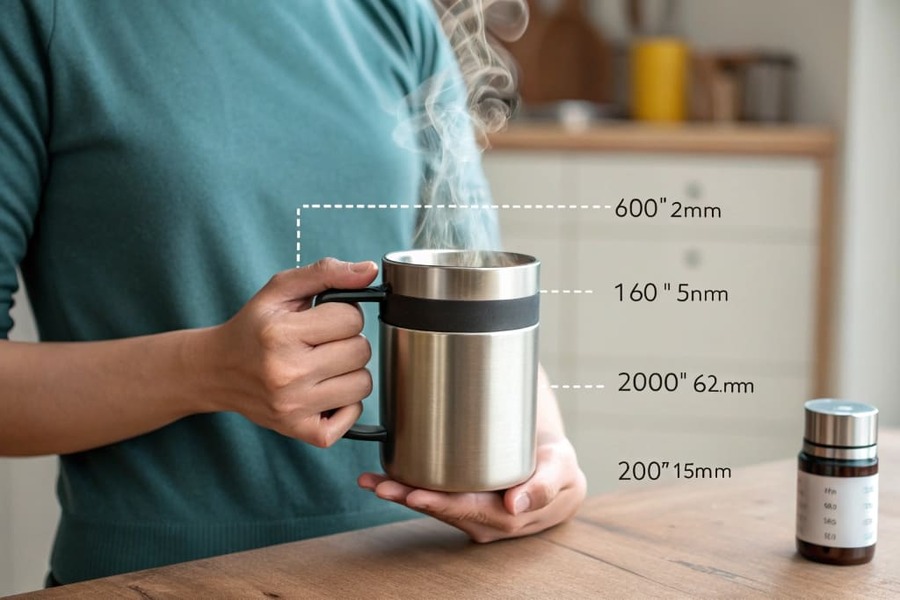
There’s nothing like a hot drink on a cold morning. With a single-wall steel mug, I have to be careful. The rim gets hot very fast. I learned to let it cool for a minute or just sip carefully. My single-wall titanium mug1 is much more forgiving. The metal doesn't get screaming hot nearly as quickly, so "lip burn" is less of an issue. This is because of thermal conductivity7. Titanium is less conductive, so heat doesn't move through it as fast. However, if you want your drink to stay hot for hours, a single-wall mug of any material won't cut it. That's where double-wall vacuum-insulated mugs come in. They are heavier and bulkier, but they provide excellent insulation.
Single-Wall vs. Double-Wall: A Practical Look
The choice between single and double-wall is a trade-off between weight and insulation. A single-wall titanium mug1 is great because you can also use it to heat water directly over a stove, something you can't do with a vacuum-insulated mug.
| Mug Type | Heat Retention | Weight | Can Heat on Stove? |
|---|---|---|---|
| Single-Wall Titanium | Fair | Ultralight | Yes |
| Single-Wall Steel | Poor | Light | Yes |
| Double-Wall Titanium | Excellent | Medium | No |
| Double-Wall Steel | Excellent | Heavy | No |
If you need a multi-purpose tool to both drink from and cook in, a single-wall titanium mug1 is the most versatile, lightweight option. If you just want to keep your coffee hot at the campsite, a double-wall steel mug offers the best insulation for the price.
Is the Higher Price of Titanium Really Worth It?
Top-tier outdoor gear can be very expensive. You don't want to spend money on features you don't actually need. Let's look at the cost.
Steel mugs are very affordable, giving you great performance for a low price. Titanium mugs are a premium product, costing two to four times more. The high price is only worth it for serious adventurers who need the lightest gear possible.
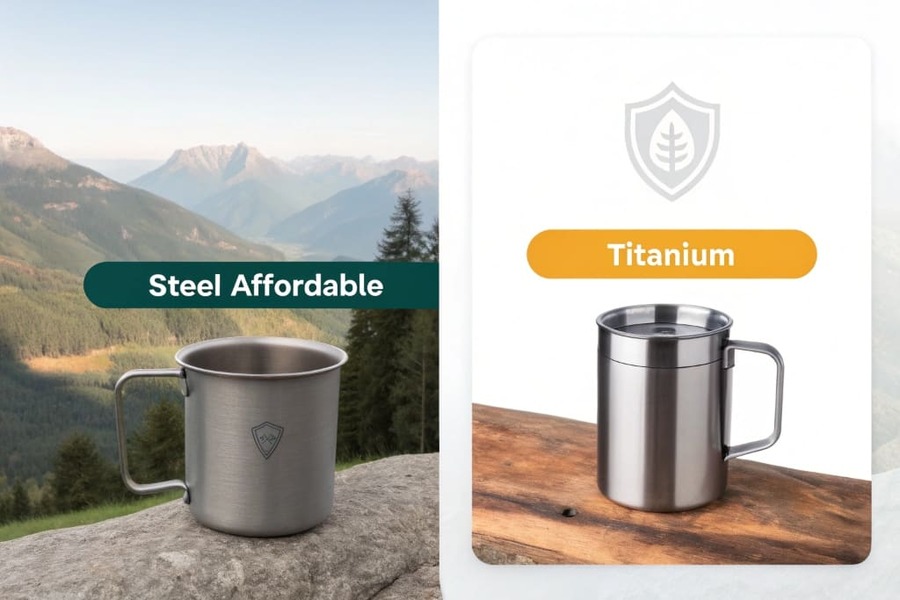
When I bought my first set of camping cookware, I went with stainless steel. It was affordable, tough, and got the job done. I used it for years. It wasn't until I started planning longer, more demanding hikes that I considered upgrading to titanium. The price was a shock at first. Why is it so much more expensive? The raw material is more costly, and it's much harder to shape and weld, which drives up manufacturing costs. I had to ask myself if shaving a few ounces from my pack was worth the extra hundred dollars. For me, at that time, it was. The investment paid off in comfort on the trail.
A Lifetime Investment or a Practical Purchase?
Think of a steel mug as a practical, reliable purchase. Think of a titanium mug1 as a long-term, specialized investment. It's not for everyone, but for the right person, it's invaluable. For brand managers or procurement managers, this is a key distinction. Steel products appeal to a broad, price-conscious market, while titanium targets a niche, performance-driven audience8.
| Feature | Titanium Mug | Stainless Steel Mug |
|---|---|---|
| Price Range | High ($25-$60) | Low ($10-$25) |
| Target User | Ultralight Backpackers, Thru-hikers | Everyone, Car Campers, Budget Buyers |
| Value Proposition | Ultimate weight savings2 and performance | Excellent durability and function for the price |
If you're a weekend warrior, a car camper, or just starting out, a stainless steel mug is the smartest choice. It's durable, effective, and easy on your wallet. If you're an experienced backpacker obsessed with reducing your pack weight, the high cost of titanium is a justifiable price for performance.
Conclusion
Your choice is clear. For ultralight backpacking3, titanium is the undisputed champion. For durable, affordable, and versatile use in all other outdoor situations, the classic stainless steel mug wins.
Discover why titanium mugs are favored by backpackers for their lightweight and durable properties. ↩
Understand the significance of reducing weight in your backpack for a more enjoyable hike. ↩
Explore the philosophy of ultralight backpacking and how it enhances the hiking experience. ↩
Understand the benefits of rustproof materials in outdoor environments. ↩
Find out how corrosion resistance affects the longevity and reliability of outdoor equipment. ↩
Discover how double-wall mugs provide superior insulation for keeping drinks hot or cold. ↩
Learn how thermal conductivity influences heat retention and safety in outdoor mugs. ↩
Identify the target audience for high-performance outdoor gear like titanium mugs. ↩