
Sourcing quality outdoor gear1 can be a challenge. Poorly made cookware fails in the field, leading to unhappy customers and damaging your brand's reputation. Don't let that happen.
Before buying titanium cookware2, you must understand five key areas: material grade3, functional design4, the manufacturing process5, customization capabilities6, and supplier reliability7. Mastering these points ensures you source durable, safe, and brand-enhancing products that your customers will trust.
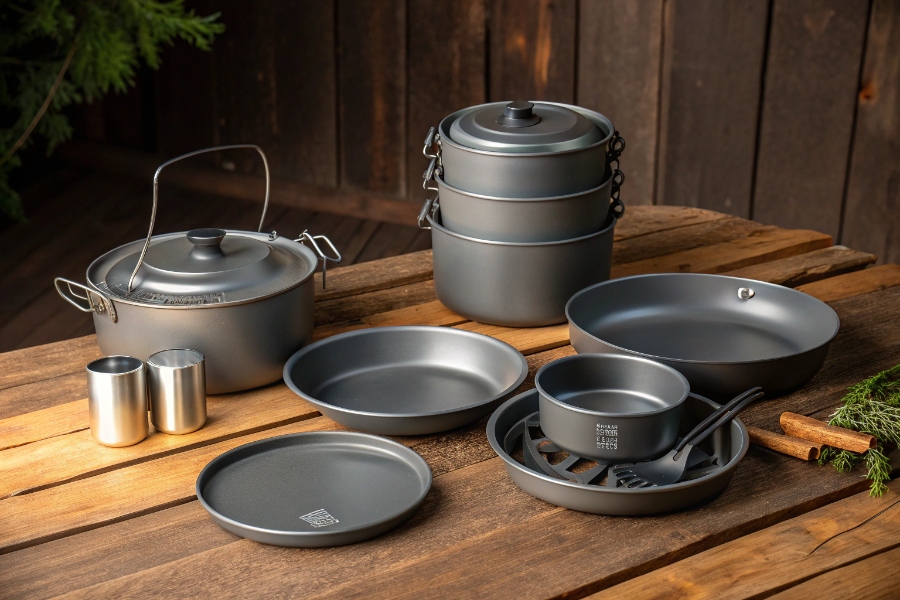
Making the right choice for your brand can feel overwhelming, especially when balancing quality, cost, and brand identity. A mistake in sourcing can lead to logistical nightmares and wasted investment. But with the right knowledge, you can confidently select a partner who will help your brand succeed. Let's break down each of these five critical points so you can make an informed decision for your next procurement project.
Why Does Titanium Grade Matter for Your Cookware?
Are you worried about product safety and long-term durability? Using low-grade titanium can introduce impurities and cause cookware to fail under stress. This choice directly impacts your brand's promise of quality.
High-grade titanium, like Grade 1 or 2, is essential. It guarantees your cookware is biocompatible8, non-toxic, corrosion-resistant9, and incredibly strong. This is the standard for premium outdoor gear, protecting both your customers' health and your brand's reputation for excellence.
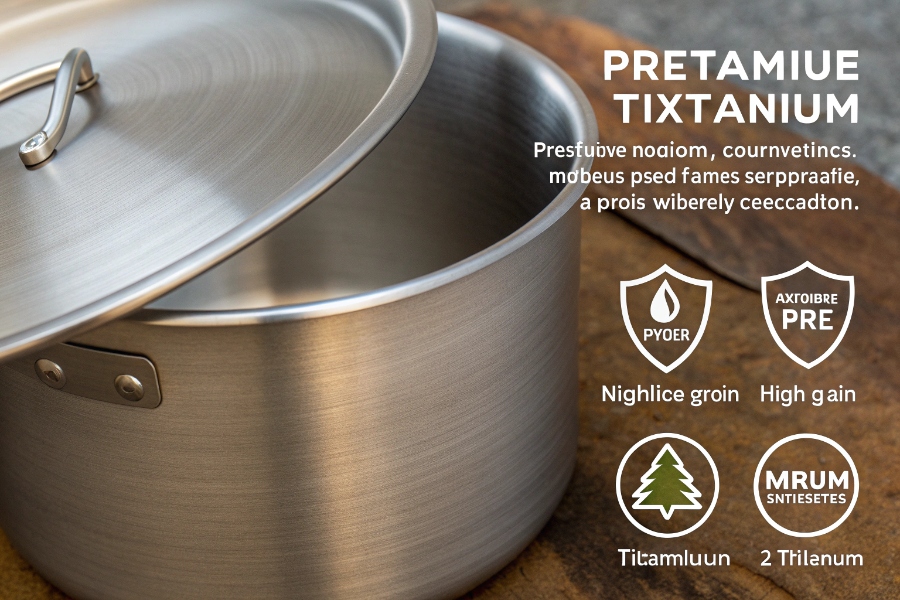
When we talk about titanium, not all metal is created equal. The grade of titanium determines its purity, strength, and performance. For cookware, this is not a detail to overlook. As a procurement manager, you are the gatekeeper of quality for your brand. I remember a new client who came to us after receiving complaints about a metallic taste from their previous cookware line. The problem was traced back to a low-purity titanium alloy their old supplier used to cut costs.
Understanding Titanium Grades
Pure titanium and its alloys are categorized into different grades. For direct food contact, you must insist on commercially pure titanium.
| Grade | Key Characteristics | Best Use Case |
|---|---|---|
| Grade 1 | Highest purity, softest, most formable | Cookware, pots, and cups where safety is paramount. |
| Grade 2 | Slightly stronger than Grade 1, excellent corrosion resistance | The "workhorse" for high-quality cookware. A perfect balance of strength and purity. |
| Grade 5 | An alloy (with aluminum & vanadium), much stronger | Not ideal for cookware due to alloy content. Used for tent stakes or tools. |
At our facility, we exclusively use Grade 1 and 2 titanium for all our cookware. This ensures every pot, pan, and mug is 100% food-safe, imparts no flavor, and can withstand the bumps and scrapes of outdoor life. Choosing the right grade is the first step in building a product line your customers can trust for years.
How Does Design Affect Usability and Brand Identity?
Generic cookware designs get lost on a crowded shelf. Your customers expect smart, functional gear that makes their outdoor experience better. A poor or uninspired design leads to weak sales.
A thoughtful design improves usability with features like foldable handles10, nesting parts for compact storage, and clear volume markings11. For your brand, unique design elements create a distinct identity that attracts loyal customers and justifies a premium price.
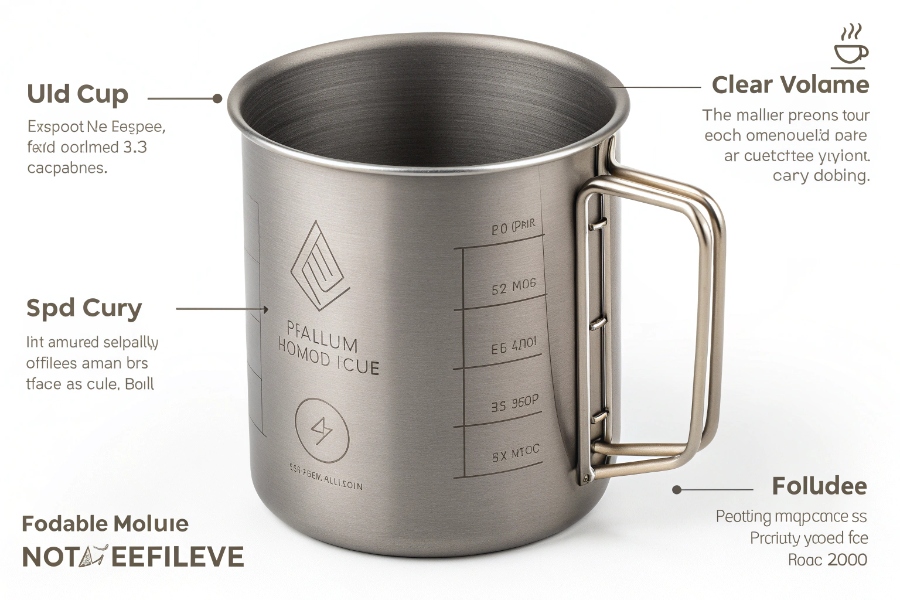
Beyond the material, the physical design of the cookware is what the end-user interacts with every day. It is the difference between a frustrating meal and a pleasant one. Over my ten years in this industry, I've seen brands succeed or fail based on these small details. A brand manager I work with once told me, "Our customers aren't just buying a pot; they are buying a better camping experience." That insight is key. Good design is not just about looks; it is about function and creating that better experience.
Key Design Elements to Consider
When evaluating a supplier's design capabilities, focus on features that add real value.
- Nesting & Stackability: A full cook set should pack down into a single, compact unit. This saves precious space in a backpack. We design our sets so that pots, pans, and even a small gas canister can fit inside one another.
- Handles and Lids: Are the handles long enough to keep hands away from the heat? Do they lock securely in place? Do they fold away neatly? A good lid should fit snugly, have a strainer hole, and include a heat-resistant tab for safe handling.
- Surface Finish: The finish affects both aesthetics and performance.
- Polished: Easy to clean but shows scratches more easily.
- Sandblasted/Matte: Hides scratches well and provides a modern, technical look.
- Volume Markings: Stamped or laser-etched markings inside a pot are a simple but incredibly useful feature for cooking.
These elements are where your brand can shine. Through our OEM/ODM process, we help you refine these details to create a product line that is uniquely yours and perfectly aligned with what your customers need.
What Should You Look for in the Manufacturing Process?
Inconsistent quality is a procurement manager's worst nightmare. A single bad batch can destroy consumer trust and lead to expensive recalls. Don't let poor manufacturing control sink your product line.
A reliable manufacturing process5 must have strict quality control (QC)12 at every stage, from raw material inspection to final packaging. Look for suppliers with dedicated, experienced QC teams and documented procedures to ensure every single piece meets your standards.

A great design is meaningless if the factory can't produce it consistently. This is where a supplier's experience truly shows. I've walked through countless factories in my career, and the difference between a top-tier facility and an average one is immediately obvious. It's in the organization of the production line, the cleanliness of the workspace, and, most importantly, the presence of dedicated quality inspectors. For large volume orders, you cannot afford any variance in quality.
Our Quality Control Checkpoints
To guarantee stability and quality for our partners, we have built a multi-stage QC system. Each of our 8 production lines is managed by a QC professional with over five years of experience. They are empowered to stop production if anything deviates from the standard.
- Raw Material Inspection: We verify the grade and thickness of every sheet of titanium that enters our factory. We reject any material that doesn't meet our strict purity standards.
- Stamping and Forming: After each pot is pressed into shape, it's checked for uniform thickness, dents, or imperfections.
- Welding and Assembly: For products with handles or spouts, every weld is inspected for strength and consistency. A weak weld is a point of failure.
- Finishing and Polishing: Our team inspects the surface finish to ensure it's uniform and free of defects before any logos are applied.
- Final Pre-Shipment Inspection: A random sample from the finished batch undergoes a final, comprehensive check to ensure it meets all specifications before it is packed and shipped.
This rigorous process is how we build trust with major brands in Europe and the US. It ensures that the 10,000th unit is identical in quality to the first.
Are Customization Options Important for Your Brand?
Are you selling the same product as your competitors, forcing you into a price war? Without a unique selling proposition, your brand risks getting lost in a sea of similar-looking gear.
Customization is vital for building a memorable brand. OEM/ODM services allow you to request exclusive designs, add custom logos, and specify unique finishes. This differentiation builds brand loyalty and gives you control over your market position.
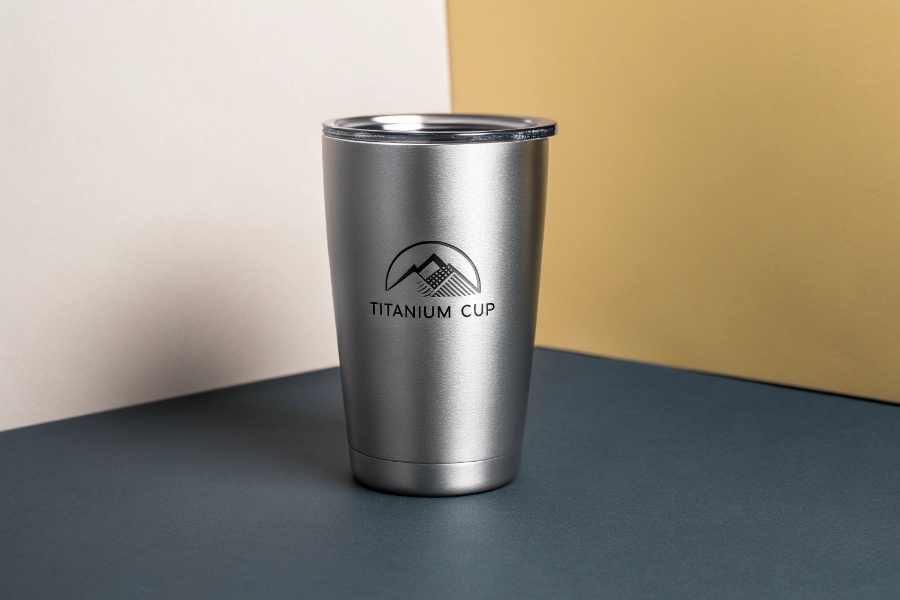
For any brand manager, differentiation is the key to long-term success. Relying on off-the-shelf products is a short-term strategy. True brand value is built when customers recognize your products by sight and associate them with quality and innovation. This is where a strong OEM/ODM partner becomes invaluable. We don't just manufacture products; we help you create them. I find this to be the most exciting part of my job—collaborating with a brand to bring their unique vision to life.
Paths to a Unique Product Line
Customization can be simple or complex, depending on your goals and budget. Here are the most common options we provide:
| Customization Type | Description | Benefit for Your Brand |
|---|---|---|
| Logo & Branding | Laser-etching or stamping your logo onto the product. | Increases brand visibility and reinforces ownership. |
| Surface Finish | Choosing between polished, sandblasted, or other finishes. | Defines the aesthetic feel and premium positioning of your brand. |
| Packaging | Custom-designed boxes, mesh sacks, or retail packaging. | Enhances the unboxing experience and shelf appeal. |
| Full ODM (Original Design Manufacturing) | We help design a completely new product from your concept. | Creates a 100% exclusive product that no competitor can copy. |
For over a decade, we have specialized in these services. We understand that your success is our success. By providing flexible and reliable customization, we empower you to build a powerful brand that stands out and earns customer loyalty.
How Do You Verify a Supplier’s Reliability and Certifications?
Choosing the wrong supplier creates endless problems. Missed deadlines, communication breakdowns, and non-compliant products can halt your business and damage your professional reputation. This risk is too high to ignore.
Verify a supplier by checking their business history, production capacity, and client testimonials. Crucially, you must ask for key certifications like ISO 900113 for quality management and food-grade compliance reports like FDA or LFGB for your target market.
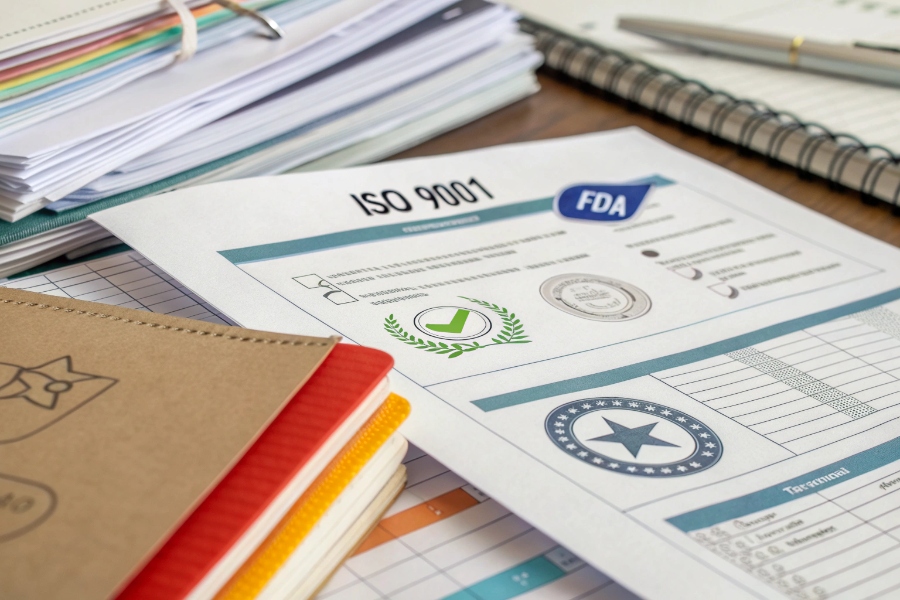
Your job as a procurement manager is to minimize risk. A supplier's promises mean nothing without proof. Before signing a large contract, conducting thorough due diligence is non-negotiable. I always advise potential partners to think of it like hiring a critical employee. You need to check their references and qualifications. A reliable supplier will be transparent and ready to provide all the documentation you need. If they hesitate, it's a major red flag.
The Supplier Vetting Checklist
Use this checklist during your evaluation process to ensure you partner with a capable and trustworthy manufacturer.
- Years in Business: How long have they been operating? A decade or more of experience (like Wanderware's 10+ years) indicates stability and expertise.
- Major Markets Served: Do they have experience exporting to your region (e.g., Europe, North America)? This implies familiarity with your market's standards and logistics.
- Factory Audits: Ask for their latest factory audit reports, such as BSCI or Sedex. These reports evaluate social compliance and working conditions.
- Quality Management System: Do they have an ISO 9001 certificate? This demonstrates a commitment to a standardized quality process.
- Product-Specific Certifications: For cookware, LFGB (for Germany/EU) and FDA (for the US) compliance reports are mandatory. They prove the material is food-safe.
- Responsiveness and Communication: How quickly and clearly do they respond to your inquiries? Good communication is essential for a smooth partnership.
Vetting a supplier thoroughly upfront prevents major headaches down the road. It is the foundation of a secure supply chain and a successful, long-term business relationship.
Conclusion
Choosing the right titanium cookware2 comes down to five things: material, design, manufacturing, customization, and supplier reliability7. Master these points to build a successful and reputable outdoor gear brand.
Discover where to find reliable outdoor gear that enhances your brand's reputation and customer satisfaction. ↩
Learn why titanium cookware is a top choice for camping, offering durability and safety for outdoor adventures. ↩
Understand how the right material grade ensures safety, durability, and quality in your cookware products. ↩
Explore how thoughtful design features can enhance usability and create a unique brand identity. ↩
Learn how a consistent manufacturing process ensures high-quality cookware and prevents costly recalls. ↩
Discover how customization can differentiate your brand and build customer loyalty in a competitive market. ↩
Find out how to assess a supplier's reliability to ensure a smooth and successful partnership. ↩
Explore the importance of biocompatibility in cookware to ensure safety and health for users. ↩
Discover how corrosion resistance enhances the longevity and performance of titanium cookware. ↩
Learn how foldable handles improve portability and convenience for outdoor cooking. ↩
Understand the usefulness of volume markings for precise cooking measurements in outdoor settings. ↩
Learn how strict quality control ensures consistent product quality and customer satisfaction. ↩
Understand how ISO 9001 certification demonstrates a supplier's commitment to quality management. ↩