
Struggling with a heavy backpack on long trails? Every extra ounce makes the hike harder. Titanium cookware promises an ultralight solution, but you wonder if it's worth the high price.
Yes, for serious campers and backpackers, titanium cookware1 is absolutely worth it. Its incredible strength-to-weight ratio2 means a much lighter pack. It's also extremely durable, corrosion-resistant3, and completely safe for cooking, making it a long-term investment for any outdoor adventure.
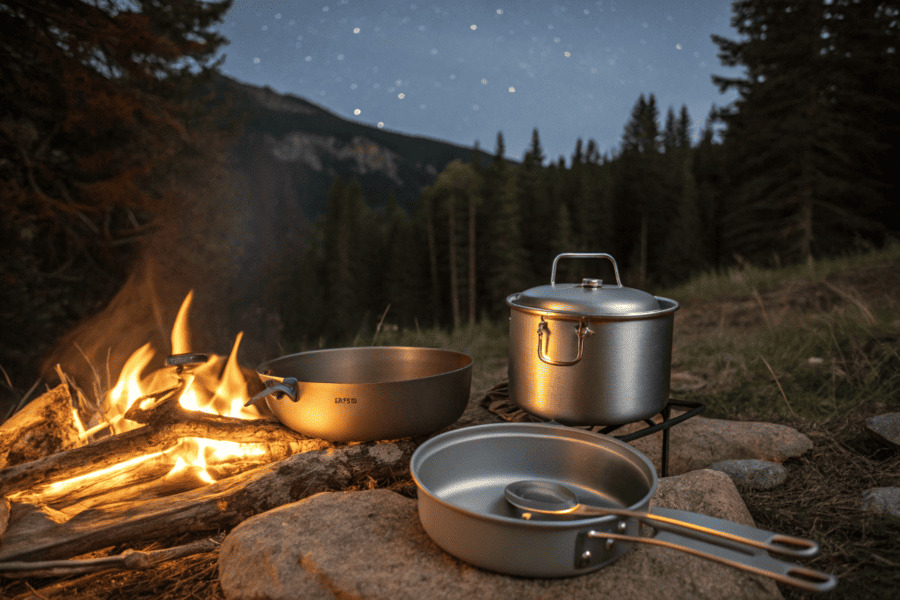
I've spent years in the outdoor gear industry, and I’ve handled countless pots and pans. When I first started backpacking, my kit was a clunky mix of aluminum and stainless steel. It did the job, but my shoulders always paid the price. Then I switched to titanium. The difference was immediate and huge. It felt like I’d unlocked a new level of hiking freedom. But I know you have questions beyond just weight. You need to know how it really performs when you're miles from civilization and counting on your gear. Let's break it down so you can decide if it's the right choice for you.
How Does Titanium Stack Up Against Other Materials?
Choosing cookware feels complicated with so many options. You see aluminum, stainless steel, and titanium, and it's hard to know which is best for your needs and budget.
Titanium is the lightest and strongest option, beating aluminum and stainless steel. While aluminum heats faster and steel distributes heat more evenly, neither can match titanium's durability and ultralight performance for serious backpacking.
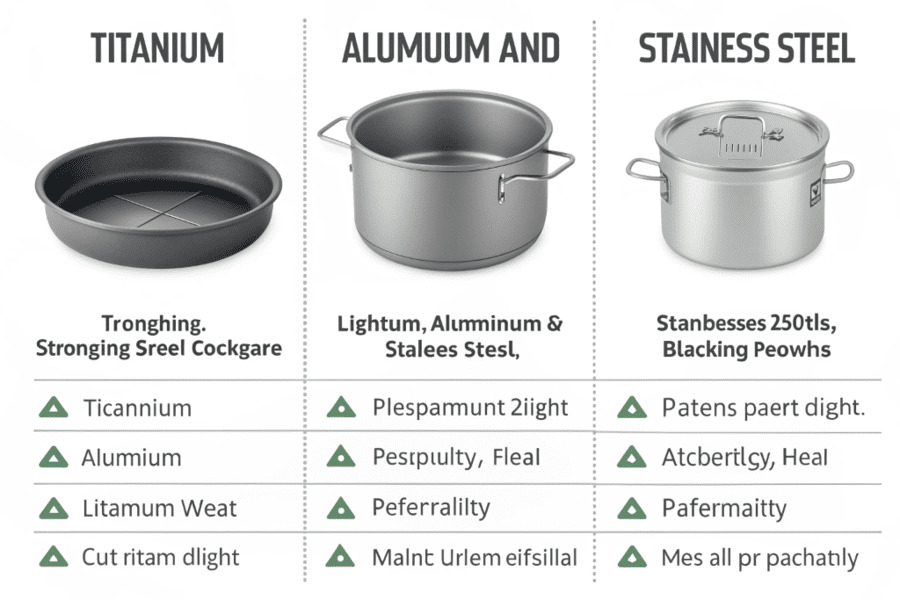
When I'm advising people on gear, the first thing we talk about is the trade-off between weight, performance, and cost. There is no single "best" material; there's only the best material for a specific job. For backpacking, where every gram matters, titanium often comes out on top. But for car camping or cooking complex meals, other materials might be a better fit. As a manufacturer, we understand these material properties deeply. We choose titanium not just because it's a premium material, but because its performance characteristics are perfectly aligned with the demands of the wild.
Material Head-to-Head
Let's look at the specifics. The choice you make here directly impacts your cooking experience and how heavy your pack is.
| Feature | Titanium | Aluminum | Stainless Steel |
|---|---|---|---|
| Weight | Ultralight (++) | Lightweight (+) | Heavy (--) |
| Durability | Extremely High (++) | Low (-) | Very High (+) |
| Heat Transfer | Fast, but can have hot spots4 (-) | Very Fast (++) | Slow, but even (+) |
| Corrosion Resistance | Excellent (++) | Good (with coating) | Good (+) |
| Cost | High (--) | Low (++) | Moderate (-) |
For me, the decision comes down to my trip's goal. If I'm thru-hiking and my main goal is boiling water for dehydrated meals5 quickly, titanium is the undisputed champion. It's so light I barely notice it's there.
Are There Any Downsides to Cooking with Titanium?
You've heard all the great things about titanium. It's light and strong. But you suspect there must be a catch, maybe in how it actually cooks your food.
The main downside of titanium is its tendency to develop hot spots4. Because it's a thin material that heats up very quickly, it doesn't distribute heat evenly. This can lead to food sticking or burning if you're not careful, especially with more complex meals.
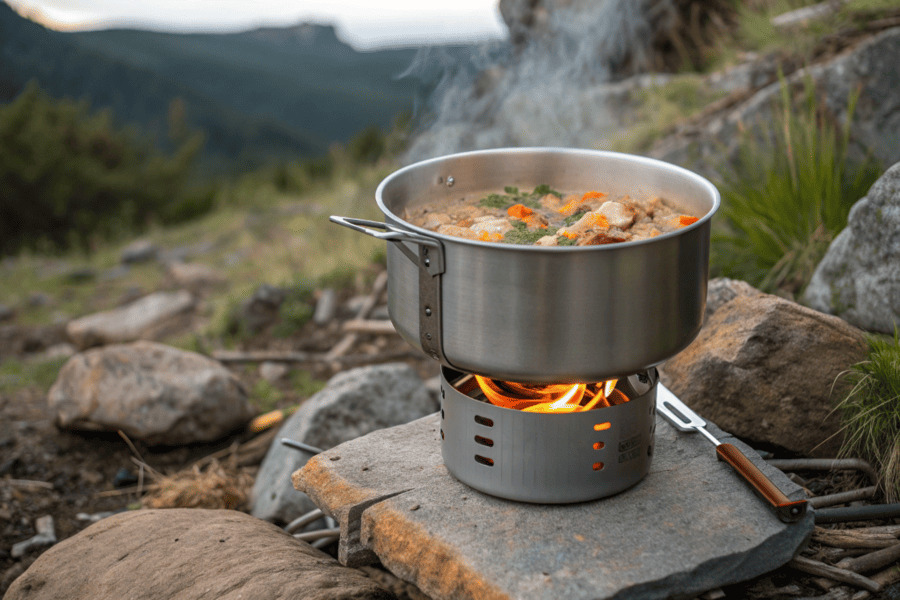
I learned this the hard way on one of my first trips with a new titanium pot. I was trying to fry an egg and ended up with a burnt mess in the center and a raw ring around the outside. It was a frustrating experience. This is a critical piece of information for anyone considering titanium. It’s fantastic for simple tasks like boiling water for coffee or rehydrating a freeze-dried meal. But if you dream of sautéing onions and garlic in the backcountry, you need to manage your expectations and your heat source carefully.
Managing the Heat
Understanding this limitation is key to having a good experience. It's not that you can't cook real food in titanium; you just have to adapt your technique.
- Keep the Heat Low: Use your camp stove6 on its lowest possible setting. This gives you more control and reduces the chance of scorching your food.
- Stir Constantly: Don't let food sit in one spot for too long. Constant stirring helps distribute the heat more evenly across the bottom of the pot.
- Add Liquid: Using a bit of extra water or oil can create a buffer between the food and the pot's hot surface, preventing sticking.
I tell my friends to think of titanium as a specialist tool. It's a high-performance piece of gear designed for speed and low weight. It’s not an all-purpose kitchen frying pan. If you understand its strengths and weaknesses, you'll be much happier with its performance on the trail.
What Should I Look for When Buying Titanium Cookware?
You're ready to invest in titanium, but you see different brands and styles. You want to make sure you're spending your money on a quality product that will actually last.
Look for high-quality construction7, paying attention to handle welds8 and lid fit. Also, consider the thickness9 (thinner is lighter but less even heating) and features like volume markings10, a pour spout11, and coated handles that won't get hot.
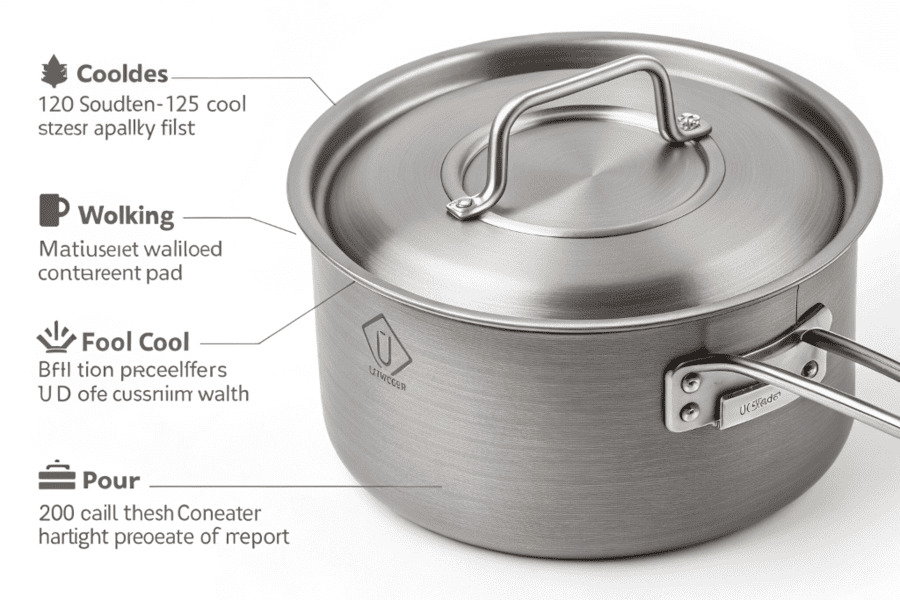
As someone who oversees production lines, I can spot quality from a mile away. The small details are what separate a pot that lasts a decade from one that fails after a few seasons. A solid, well-attached handle is non-negotiable. I've seen cheap pots where the spot welds on the handles fail, which is dangerous when you're holding boiling water. A snug-fitting lid is also crucial—it traps heat, helping you boil water faster and save precious fuel. These details are what our clients, the brand managers and purchasing managers, demand from us, because they know it’s what experienced campers look for.
The Anatomy of a Great Titanium Pot
Let's break down the key features to inspect before you buy. Think of this as a checklist for your next gear purchase.
- Handles: Are they spot-welded securely? Do they fold away neatly? Some of the best designs have silicone-coated handles12 to protect your hands from the heat.
- Lid: Does it fit well? Does it have a small strainer hole? A small, heat-resistant tab or knob to lift it is a huge plus.
- Graduations: Stamped volume markings10 on the inside of the pot are incredibly useful for measuring water for dehydrated meals5. No need to pack a separate measuring cup.
- Finish: A polished or sandblasted finish doesn't just look good; it can also make cleaning a bit easier.
- Overall Design: Consider the shape. A wider, shorter pot is more stable on a small stove, while a taller, narrower pot is often more efficient for boiling water.
When you invest in quality titanium, you're buying a piece of gear that can join you on adventures for years to come.
Conclusion
Titanium cookware is a top-tier investment for serious backpackers who prioritize weight savings and durability. It's a game-changer for lightening your load on any outdoor adventure.
Explore the advantages of titanium cookware, including its lightweight and durable properties, perfect for outdoor enthusiasts. ↩
Learn how the strength-to-weight ratio influences your cookware selection for camping and hiking. ↩
Understand the significance of corrosion resistance in cookware, especially for outdoor cooking. ↩
Learn about hot spots in cooking and tips to prevent them, especially when using titanium cookware. ↩
Discover tips and techniques for cooking dehydrated meals effectively with titanium cookware. ↩
Explore the best camp stoves that pair well with titanium cookware for optimal cooking performance. ↩
Get insights on identifying high-quality cookware to ensure durability and performance during your adventures. ↩
Discover the importance of handle welds in cookware and how they affect safety and usability. ↩
Learn how the thickness of cookware impacts cooking efficiency and heat distribution. ↩
Understand the advantages of having volume markings in cookware for precise cooking measurements. ↩
Explore the benefits of a pour spout in cookware for easier and mess-free pouring. ↩
Find out how silicone-coated handles enhance safety and comfort when handling hot cookware. ↩